

Safety Systems That Function When Required
Automatic and Fire Door Inspection and Repair Services in Russell Springs for doors that must close reliably during emergencies or meet health department operational standards
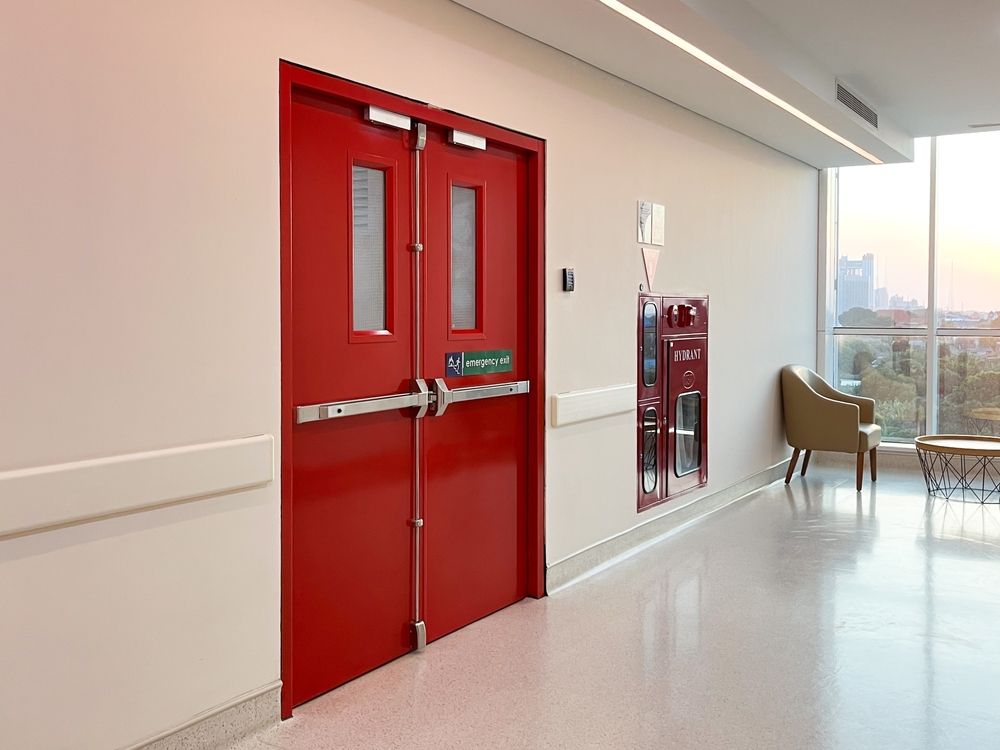
A fire door that doesn't close fully or an automatic door that hesitates mid-cycle represents a compliance failure and a functional liability. Clark Companies services both automatic entry systems used in commercial and healthcare settings and fire-rated doors required to compartmentalize buildings during emergencies. These are not cosmetic repairs—automatic doors must respond predictably to sensors and manual overrides, while fire doors must close and latch on their own from any open position to maintain their rating. You recognize the need for service when door leaves stop mid-travel, when closing speed becomes inconsistent, or when health inspectors note operational deficiencies during facility reviews.
The work involves testing sensor arrays, verifying closer calibration, inspecting hold-open and release mechanisms on fire doors, and ensuring that motorized operators cycle through their full programmed sequence. For fire doors, the closer must generate enough force to overcome resistance from weatherstripping and seals while still closing slowly enough to prevent injury, and the latch must engage without requiring manual assistance.
Arrange an inspection to document current door performance against the required operational standards.
How Fire and Automatic Door Systems Maintain Compliance
Fire door service begins with a drop test—releasing the door from a fully open position and observing whether it closes completely and latches without intervention. The closer's backcheck, sweep, and latch speeds are then measured and adjusted to fall within the ranges specified by the door's fire rating. Automatic doors require verification that sensors detect approach reliably, that opening and closing speeds comply with accessibility timing requirements, and that safety stop functions activate when obstructions are detected.
After service, automatic doors open when approached from the activation zone and close after the programmed dwell time without hesitation or reversal unless an obstruction is present. Fire doors close from any angle and fully seat the latch, meaning the door will perform its compartmentalization function if a fire alarm is triggered or if the magnetic hold-open releases during an emergency. Health department inspections no longer flag operational deficiencies, and the facility meets the documented performance standards required by its occupancy classification.
The service scope varies based on whether the system has been maintained on schedule or has operated with known defects for an extended period. Deferred maintenance on automatic operators often means worn drive belts or motor brushes, while fire doors that have been propped open long-term may require hinge reinforcement or frame alignment in addition to closer replacement.
Common Questions About This Service
Facility managers and business owners typically ask about compliance documentation, testing intervals, and what constitutes a functional failure in these systems.
What happens during a fire door compliance inspection?
The door is released from multiple open positions to verify it closes and latches each time. Closer speed is measured with a timing device, and the latch engagement is checked to confirm the bolt fully extends into the strike without requiring force.
How often do automatic doors need service to remain compliant?
Most accessibility standards and manufacturer recommendations call for quarterly operational testing and annual preventive maintenance. In Russell Springs facilities with high traffic or exposure to weather, intervals may need to be shorter due to sensor contamination and accelerated wear on operators.
Why would a fire door stop closing completely on its own?
The most common cause is a closer that has lost hydraulic fluid or has been adjusted incorrectly, reducing the force available to overcome the resistance from seals and latches. Frame shifts and hinge binding also prevent full closure even when closer force is adequate.
Can automatic door sensors be adjusted if they activate too early or too late?
Sensor range and sensitivity are adjustable within limits, but changes must keep activation within ADA timing requirements. If sensors are frequently triggering from non-approach movement, the issue may be mounting angle or environmental reflection rather than sensitivity.
What documentation is provided after fire door repair?
Service records should include the drop test results, closer speed measurements, and confirmation that the door meets the closing force and timing specifications required by its fire rating and the building code in effect.
Clark Companies handles both routine compliance maintenance and emergency repairs when automatic or fire door systems fail operational testing. Contact the business directly to schedule service or request documentation of current door performance.