
Doors Built to Handle Daily Business Traffic
Commercial and Residential Entry Door Repair in Russell Springs for doors that no longer latch, align, or close smoothly under constant use
Clark Companies repairs commercial entry doors designed to handle the volume and force that retail storefronts, office buildings, and public facilities put on hardware every single day. When a door sees hundreds of entries and exits weekly, components wear in predictable patterns—strike plates shift out of position, pivots loosen under repeated weight transfer, and closers lose hydraulic pressure. You notice the problem when employees start pulling doors shut manually, when locks require multiple attempts to engage, or when gaps appear along the frame that let in weather and noise.
This service addresses mechanical failures in locking assemblies, hinge systems, threshold alignment, and closer mechanisms that control door speed and force. The work involves diagnosing which specific component has failed or shifted, adjusting or replacing that part, and verifying that the door operates within the tolerances required for both security and accessibility compliance. In many cases, a door that appears to need full replacement simply needs realignment of the strike plate or adjustment of the closer's sweep and latch speed settings.
Schedule an on-site evaluation to identify which components are causing the operational failure.
What Proper Commercial Door Repair Requires
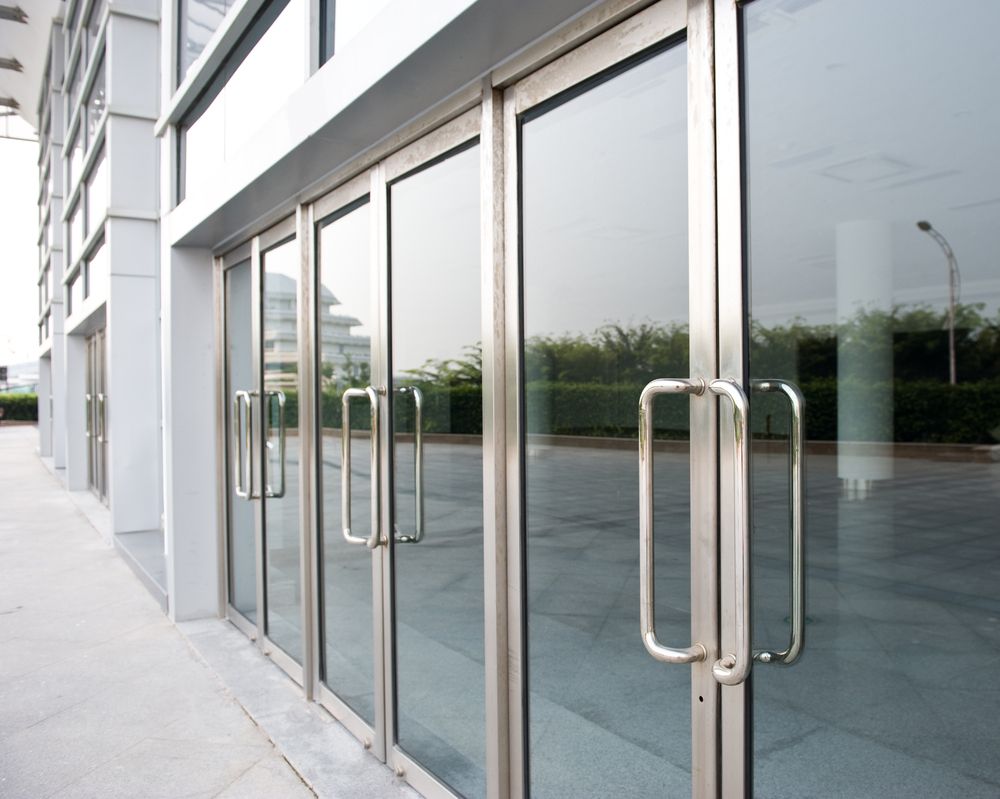
The repair begins with load testing the door through a full open-and-close cycle while checking for binding points, measuring gap consistency around the frame, and inspecting wear patterns on the latch bolt and strike. Doors in high-traffic environments often develop issues because one component failure creates a cascade—a worn pivot bearing forces the door out of plumb, which then prevents the latch from seating correctly, which leads to forced closures that damage the strike plate.
Once the work is complete, the door closes with consistent resistance from open to near-closed position, the latch engages without requiring force or jiggling the handle, and the threshold contact is uniform across the bottom sweep. Employees and customers no longer compensate for mechanical problems, and the entry maintains the environmental seal and security function it was installed to provide.
The scope of repair depends on how long the door has operated in a compromised state—early intervention usually involves adjustment and minor part replacement, while deferred maintenance often requires addressing secondary damage caused by prolonged misalignment or component failure. The assessment identifies whether the frame itself has shifted or if the issue is isolated to hardware that can be serviced without structural work.
What Business Owners Usually Ask
Questions about commercial entry door repair often focus on timing, component longevity, and compliance with accessibility standards.
What causes commercial entry doors to stop latching correctly?
Repeated impacts from high-volume use shift the strike plate or wear down the latch bolt, preventing proper engagement. In Russell Springs, seasonal temperature swings can also cause frame expansion that throws off the alignment between the bolt and strike.
How do you determine whether a door needs adjustment or component replacement?
The door is cycled multiple times while measuring latch engagement depth, checking closer arm geometry, and inspecting pivot points for play or wear. If adjustment alone cannot restore proper operation within manufacturer tolerances, the worn component is replaced.
What does it mean when a door closer makes the door slam or close too slowly?
The hydraulic valve settings control sweep speed and final latch speed independently. When these are out of adjustment or the fluid has leaked, the door either crashes into the frame or fails to generate enough force to fully seat the latch.
Can fire-rated or accessibility-compliant doors be repaired without losing their rating?
Repairs must maintain the door's listed configuration, which means using compatible hardware and preserving the original installation specifications. Any modification that affects fire rating or ADA compliance requires documentation and potentially re-inspection.
When should a business schedule door repair instead of waiting for complete failure?
Once employees begin compensating for door behavior—propping it open, forcing the lock, or adjusting how they approach the entry—the door is already operating outside its designed parameters and causing secondary wear that increases eventual repair scope.
Clark Companies addresses both immediate mechanical failures and the underlying wear patterns that lead to recurring problems in high-use commercial entries. Request a service appointment to restore reliable operation before secondary damage extends the repair requirements.