
Hauling Equipment That Carries Load Safely
Automotive and Trailer Welding Repair in Russell Springs for cracked frames, broken trailer components, and structural failures on work vehicles
Trailers and work vehicles develop structural cracks at predictable stress points—where the hitch mounts to the frame, where cross members join the main rails, and where repeated loading cycles fatigue the metal around fastener holes and weld seams. Clark Companies welds automotive frames, flatbed trailers, equipment haulers, and structural vehicle components that have fractured under use or impact. The repair addresses the mechanical failure—restoring the component's ability to carry load and transfer force—and often includes reinforcement to prevent recurrence at the same location. Once welded and reinforced, the trailer or vehicle frame no longer flexes at the repair site, tie-down points hold securely, and the equipment handles loads without visible or audible signs of structural compromise.
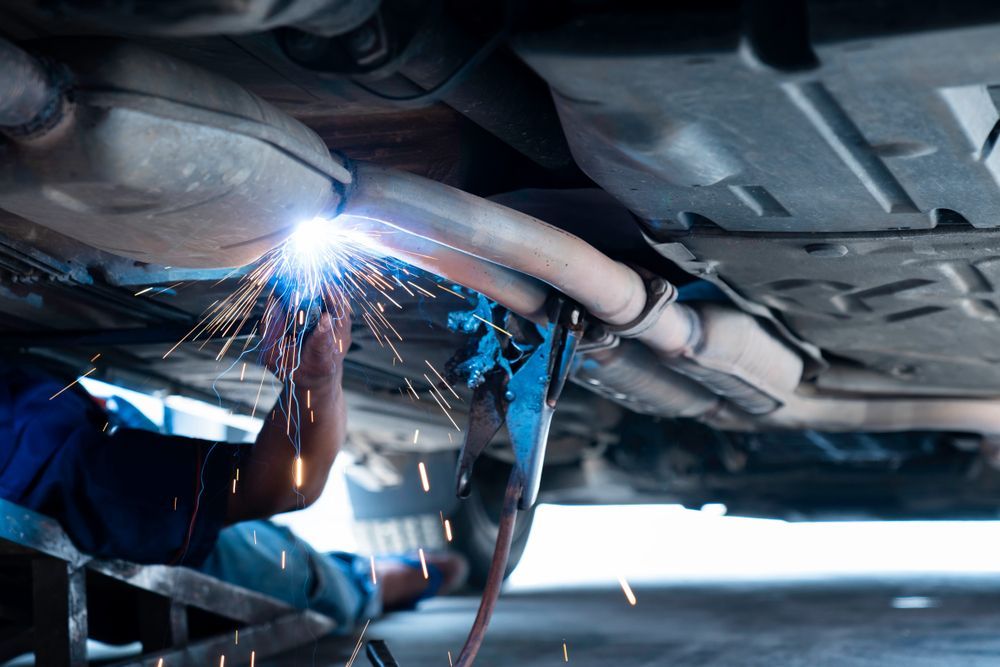
The welding process involves cleaning the fracture area to bare metal, aligning the separated sections to their original geometry, and laying weld beads that fully penetrate the material thickness and fuse to clean base metal on both sides. For areas that have cracked due to stress concentration, the repair includes adding reinforcement plates or gussets that spread the load over a larger area and reduce the likelihood of re-cracking.
Schedule an inspection to determine whether the damage is limited to the visible crack or if surrounding areas show signs of fatigue that will cause future failures.
Why Trailer and Vehicle Welds Fail and How to Stop It
Trailer frames crack because welds placed during original fabrication often don't account for dynamic loading—the twisting and impact forces that occur when a trailer travels over uneven ground or when loads shift during transport. A weld that holds fine under static load can crack when subjected to repeated flexing. Automotive exhaust components fail because heat cycling and vibration work-harden the metal until it fractures, often at the joint between the pipe and the hanger or muffler body.
After welding, the frame or component regains the rigidity needed to support cargo weight and road forces without deflection at the repair. Tie-down points anchored to repaired sections hold tension, ramps and gates operate without binding caused by frame distortion, and the trailer tracks straight because the frame geometry has been restored. On vehicle exhaust repairs, the welded joint no longer leaks, the system maintains backpressure, and the muffler stays secured to its mounting points.
The durability of the repair depends on whether the underlying cause of failure is addressed. If a trailer is routinely overloaded, even a properly reinforced weld will eventually crack again. The service includes evaluating whether the component is appropriately sized for its application or if repeated failure indicates a design limitation that reinforcement can mitigate but not eliminate.
Questions Before Starting Your Project
Owners of work vehicles and trailers typically ask about repair longevity, safety after welding, and whether welded components are as strong as original construction.
What is the difference between a cosmetic weld and a structural repair?
A structural weld must achieve full penetration through the material thickness and bond to clean base metal. Cosmetic welds may look acceptable but lack the penetration needed to carry load, which means they will crack again under stress.
Can a welded trailer frame carry the same weight it did before cracking?
If the weld achieves full penetration and the repair includes reinforcement at the stress point, the section can carry its rated load. However, if the crack resulted from overloading, the same load will eventually cause failure elsewhere on the frame.
How do you reinforce a trailer frame to prevent re-cracking?
Reinforcement typically involves welding gussets or plates across the joint to distribute stress over a larger area. The added material increases the cross-sectional strength and reduces the concentration of force at the original failure point, especially on thin-wall tubing common in trailer construction.
Is it safe to weld on a vehicle frame that supports suspension or steering components?
Frame welds near suspension mounts are structurally critical and must restore original alignment and strength. Any distortion introduced during welding can affect handling and safety, so heat input and clamping must control dimensional change throughout the repair.
When should a trailer component be replaced instead of welded?
Replacement is appropriate when the material is corroded to the point where there isn't enough sound base metal to accept a weld, or when the component is so heavily fatigued that cracks will continue appearing in new locations even after the current fracture is repaired.
Clark Companies handles welding repairs on trailers, vehicle frames, and hauling equipment used in agriculture, construction, and general transport. Bring the equipment in for evaluation or request mobile service if the component cannot be easily transported to the shop.