
Machinery Kept Operational Through Harvest
Farm Equipment Welding Repair in Russell Springs for cracked blades, broken frames, and structural failures on equipment needed during planting and harvest windows
Agricultural equipment fails during the seasons when it cannot afford to be down—tillage blades crack in rocky soil during spring prep, baler frames fracture under continuous operation during hay season, and loader bucket edges split after repeated impacts with frozen ground. The timing of these failures creates pressure that general repair timelines don't accommodate. Clark Companies provides on-site welding for farm equipment that is too large or awkward to transport, and the service is structured around minimizing downtime when weather windows and crop schedules control the pace of work. A repaired blade or frame returns to the field the same day or next morning, allowing planting or harvest to continue without losing days to equipment transport and shop scheduling.
The welding process involves identifying whether the failure is a clean break that can be rejoined or a fatigue crack that requires material removal before welding. Agricultural equipment operates in abrasive, high-impact environments, so the repair often includes building up worn areas with hard-facing material that resists future wear better than the original steel. On-site welding means the equipment stays in the field or shop yard, reducing handling and allowing the operator to return machinery to work as soon as the weld cools.
Call to arrange same-day or next-day on-site service when equipment failure interrupts field operations.
What Happens During Field Equipment Welding
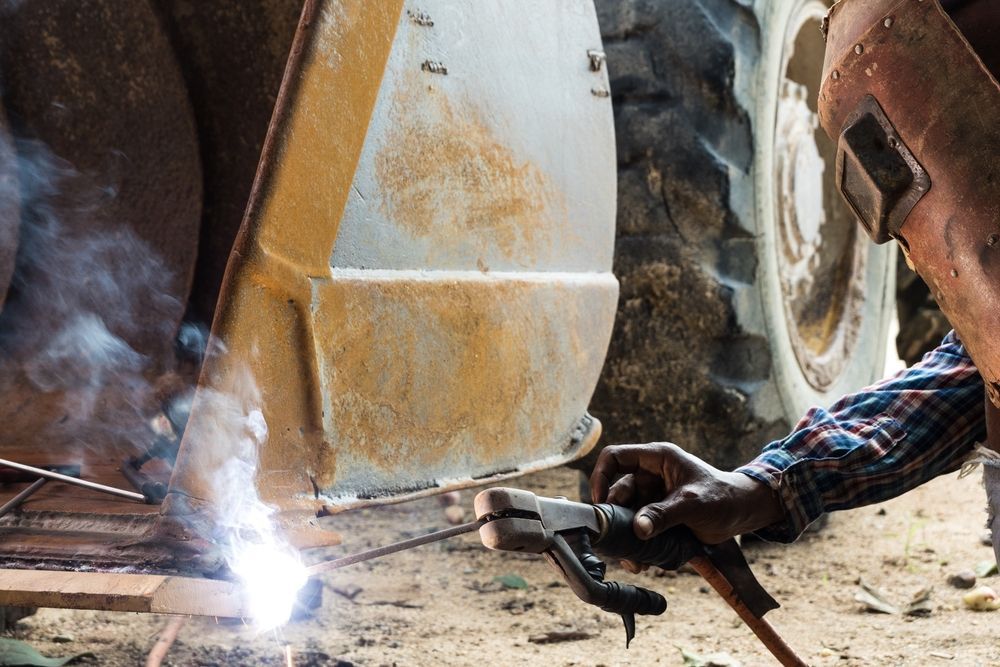
Farm equipment repair begins with grinding away dirt, rust, and any compromised metal around the fracture, then preheating thick sections if necessary to prevent cracking as the weld cools. The weld is built up in multiple passes when joining heavy material, with each layer allowed to cool enough to prevent heat distortion but not so much that the next pass causes thermal shock. Hard-facing passes add wear-resistant alloy to edges and surfaces that contact soil or abrasive material, extending service life beyond what the original component provided.
Once the repair is complete, the blade cuts into soil without deflecting or re-cracking, the frame supports implement weight and ground forces without flexing, and the component performs the same function it did before failure. The welder verifies that the repair hasn't introduced distortion that would prevent the equipment from mounting correctly or operating in alignment with other components. There is no need to adjust operational technique to compensate for a weak or flexing part.
The service is designed for durability under agricultural conditions, which means accepting that welds will be exposed to weather, vibration, and impact loading that would be unacceptable in other applications. The priority is returning equipment to service quickly with a repair strong enough to complete the current season, recognizing that some components may need replacement during off-season maintenance after years of cumulative stress.
What Property Owners Usually Ask
Farmers and equipment operators generally want to know about turnaround time, material longevity, and what types of failures can be welded versus needing parts replacement.
How quickly can on-site welding get equipment back in operation?
Most repairs are completed within a few hours of arrival, including setup, welding, and cooldown. Complex breaks requiring extensive prep or multi-pass welds may take longer, but the goal is same-day return to service whenever the damage allows it.
What types of farm equipment can be welded in the field?
Tillage tools, loader buckets, baler frames, mower decks, and most implement attachments are suitable for field welding. Equipment with precision-machined surfaces or components that require post-weld heat treatment typically need shop service to maintain tolerances.
Does welded farm equipment hold up as well as new parts?
A properly executed weld on clean, sound base metal is as strong as the original material. The question is whether the underlying cause of failure—overloading, material fatigue, or design weakness—will cause new cracks to form in adjacent areas even after the current break is repaired.
Can welding add material to worn edges and surfaces?
Hard-facing welds build up worn plow shares, bucket edges, and tillage points with alloy that resists abrasion better than the original steel. This extends the service interval before the component wears to the point where it no longer performs its function effectively.
What should be done to prepare equipment for the welder's arrival?
Clear the area around the damaged component for equipment access, and remove any hydraulic pressure, stored spring tension, or load that could shift during welding. If possible, position the equipment so the repair area is accessible without requiring the welder to work overhead or in confined positions.
Clark Companies responds to farm equipment failures with mobile welding that prioritizes fast turnaround during critical operating windows. Contact the business when equipment breaks to arrange on-site service or discuss whether the component should be brought in for shop repair during the off-season.