
Equipment Frames Returned to Service Duty
Heavy Equipment Crack and Break Repair in Russell Springs for stress fractures and structural damage in industrial and farm machinery
Cracks in heavy equipment frames, hulls, and structural components propagate quickly under continued loading, turning hairline fractures into complete breaks that immobilize machinery and halt operations. Clark Companies welds cracks and breaks in heavy-duty equipment used in industrial, farm, and utility applications throughout Russell Springs, focusing on repairs that restore structural integrity so the component continues handling stress cycles without re-cracking at the same location. Equipment that develops fractures from impact, overloading, or metal fatigue requires welding techniques that address not just the visible crack but the metallurgical changes in the surrounding heat-affected zone.
The repair process involves stopping crack propagation by drilling relief holes at the crack tips, then grinding a V-groove along the fracture path to allow full-penetration welding that fuses the separated metal back into a continuous structure. Surface-level welds that simply fill the crack without achieving deep penetration create repairs that appear solid but fail again as soon as the equipment returns to normal loading conditions.
Arrange an on-site consultation to review your equipment damage and determine the welding approach needed to restore operational integrity.
What Changes After Equipment Welding Completes
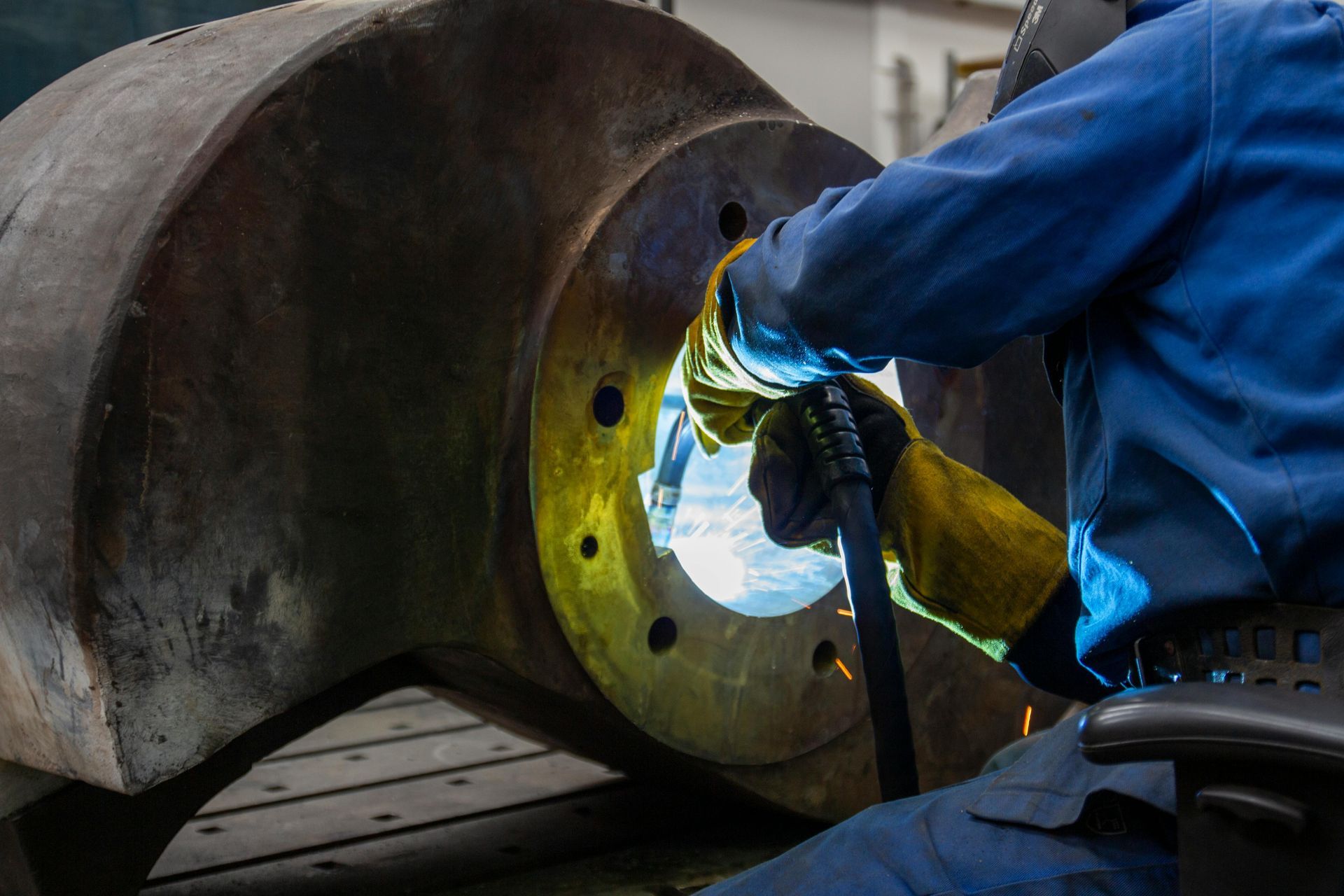
Heavy equipment cracks typically originate at stress concentration points—bolt holes, sharp corners in frame cutouts, or welds where dissimilar thickness materials meet and create stiffness mismatches. The crack grows each time the equipment cycles under load, and visible cracking indicates that fatigue damage extends beyond the crack face into the base metal. Effective repair requires preheating thick sections to prevent the rapid cooling that creates brittle weld zones, using low-hydrogen electrodes that resist cracking, and sometimes adding reinforcement plates to redistribute stress away from the original failure point.
Once the welding is finished, the repaired section shows no visible separation, the surrounding metal returns to its original color after heat treatment, and the component handles its rated load without flexing differently than adjacent unrepaired areas. You notice that the equipment operates without new vibration patterns, the frame sits square without twisting under load, and the welded area does not show heat discoloration or warping that would indicate improper thermal management during repair.
This service handles stress fractures from heavy use or impact, breaks in hulls and structural members, and damage to components that experience repeated loading cycles in demanding conditions. The approach varies based on material thickness, alloy composition, and whether the equipment can be removed from service for stress-relief heat treatment after welding.
Answers to Frequent Service Questions
Equipment crack repair involves specialized welding techniques to address fractures in heavy-duty machinery without creating new stress points or metallurgical weaknesses.
What types of heavy equipment can be repaired through welding?
The service handles cracks and breaks in frames, hulls, structural components, and load-bearing assemblies on industrial machinery, farm equipment, utility vehicles, and other heavy-duty applications where metal failure compromises operation.
How do stress fractures differ from impact breaks in repair approach?
Stress fractures typically propagate from a single origin point and require crack-arrest techniques like drilling stop holes before welding, while impact breaks create rough fracture surfaces that need thorough cleaning and sometimes V-groove preparation to achieve full penetration across the break.
Why do some equipment welds crack again after repair?
Inadequate preheat on thick sections, using the wrong filler material for the base metal alloy, insufficient penetration depth, or failing to address the underlying stress concentration that caused the original crack all lead to repair failures that appear within days or weeks of returning equipment to service.
What preparation is required before welding cracked equipment in Russell Springs?
The area surrounding the crack must be cleaned to bare metal, oil and contaminants removed, and in many cases the component preheated to a specific temperature range that prevents rapid cooling and hydrogen-induced cracking in the weld and heat-affected zones.
When should equipment be replaced rather than repaired?
If cracks appear in multiple locations, if the base metal shows widespread corrosion or prior poor-quality repairs, or if the component has been repeatedly welded in the same area creating a brittle, over-heated zone, replacement becomes more reliable than continued repair attempts.
Clark Companies provides heavy equipment crack and break repair focused on durability and long-term reliability for industrial, farm, and utility machinery in Russell Springs. Schedule an evaluation to assess your equipment damage and discuss the welding techniques appropriate for your specific application and loading conditions.